Knowledge Center
Understanding Section 138 of the NI Act: A Legal Guide to Cheque Bounce Matters
Negotiable Instruments Act, Recovery of Debt
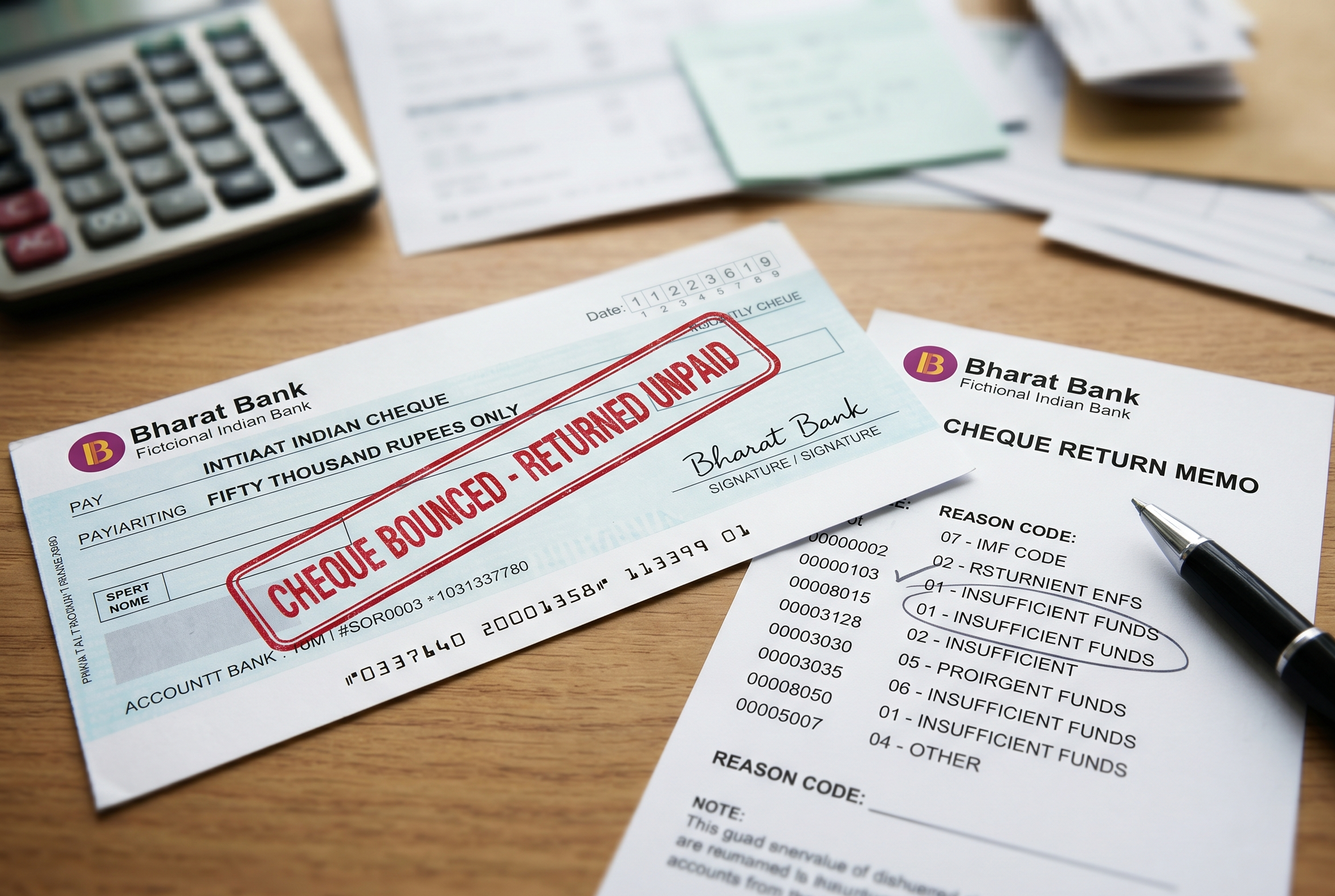
In the realm of commercial transactions and debt recovery, cheques remain one of the most widely used negotiable instruments. However, the dishonor of a cheque—commonly known as a “cheque bounce”—is not merely a breach of contract; it is a criminal offense under Section 138 of the Negotiable Instruments (NI) Act, 1881.
Whether you are a corporate entity, an NBFC, or an individual recovering a personal loan, understanding the strict procedural timelines of Section 138 is critical to ensuring your dues are legally realized.
What Constitutes an Offense Under Section 138?
For a cheque bounce to be classified as a criminal offense, several specific conditions must be met. The cheque must have been issued for the discharge of a legally enforceable debt or liability. If a cheque issued as an advance payment or a “security” (under certain conditions) is dishonored, it may complicate the litigation process.
The most common reasons for dishonor include:
Insufficient funds in the drawer’s account.
Instructions to the bank to “stop payment.”
Account closed by the drawer.
Signature mismatch or overwriting.
The Crucial Legal Timeline
The courts strictly enforce the statutory timelines in Section 138 matters. Missing a single deadline can render a complaint legally void. The standard timeline is as follows:
Validity Period: The cheque must be presented to the bank within its validity period (currently 3 months from the date written on the cheque).
Statutory Demand Notice: Upon receiving the return memo from the bank stating the cheque has bounced, the payee must send a formal legal notice to the drawer within 30 days.
The 15-Day Grace Period: The drawer is given 15 days from the date of receiving the legal notice to make the payment.
Filing the Complaint: If the drawer fails to pay the amount within those 15 days, the cause of action arises. The payee then has precisely 30 days to file a criminal complaint before the competent Magistrate.
Penalties and Recent Developments
Section 138 acts as a strong deterrent. If convicted, the drawer faces imprisonment for a term that may extend up to two years, or a fine that may extend to twice the amount of the cheque, or both.
Furthermore, courts now frequently utilize Section 143A of the NI Act, which allows the Magistrate to order the accused to pay interim compensation (up to 20% of the cheque amount) to the complainant during the pendency of the trial.
Why Timely Legal Counsel Matters
Cheque bounce litigation requires meticulous drafting of the statutory notice and precise calculation of limitation periods. Jurisdictional issues—determining exactly which court has the authority to hear the matter—also require careful legal assessment based on where the bank branches are located.
Taking immediate action upon the dishonor of a cheque is the best way to safeguard your financial interests and initiate swift recovery.
Disclaimer: This article is intended for informational purposes only and does not constitute legal advice. For specific guidance regarding cheque dishonor, debt recovery, or commercial litigation, you may schedule a formal consultation with our firm.